Thanks for a great July Meeting! Stay tuned for what’s next from ESIP.
FUNding Friday: Poster Paper, Food, and Fast Pitches
Curiosity and openness are core to the Earth Science Information Partners (ESIP) community. One of the more playful initiatives at ESIP is a lively microfunding competition held during the July in-person meeting called FUNding Friday.
Here are the 2026 projects plus short write ups about each.
What happens when you mix poster paper, colorful pens, a strict two-minute clock, and a hotel full of passionate Earth science innovators? You get FUNding Friday—ESIP’s beloved annual tradition at the July Meeting of turning small grants into big impact.
Every year, FUNding Friday reminds us that while tackling the planet’s greatest challenges takes serious data, it often begins with a single, creative spark. It’s our dedicated space to plant seed ideas, test out delightful concepts, and fuel actionable impact through microfunding.
This year’s event in Austin, TX delivered all the familiar marker magic. On Thursday evening, competitors grabbed food and drinks from the AT&T Hotel bar and dispersed throughout the venue to get creative, turning lobby lounges, quiet tables, and patios into pop-up studios. Design ideas flowed while pitch lines and dance moves were rehearsed into the night.
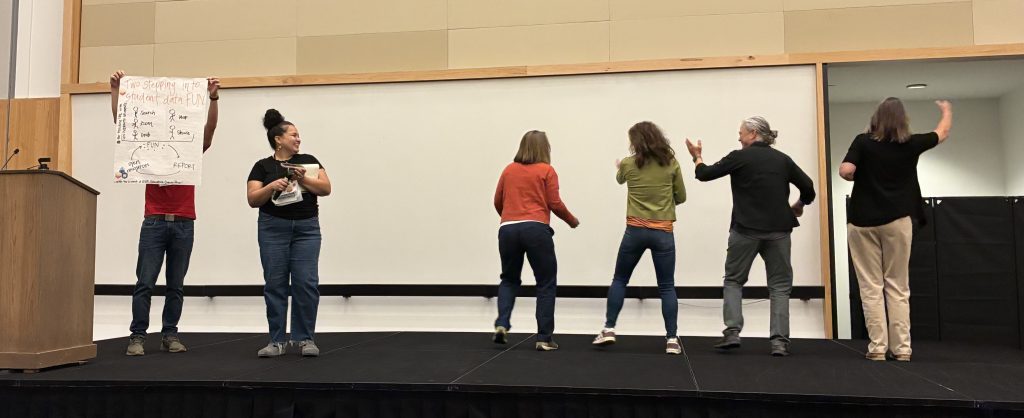
Although the competition was streamlined into a single category this year (no separate Teachers and Students track), the field was as vibrant as ever. Students and early-career researchers stood shoulder-to-shoulder with veteran attendees, filling Friday morning’s two-minute pitches with energy, catchy hooks, and fresh perspectives. After a fast-paced showcase over breakfast, the crowd voted at small ballot boxes to choose this year's microgrant recipients.
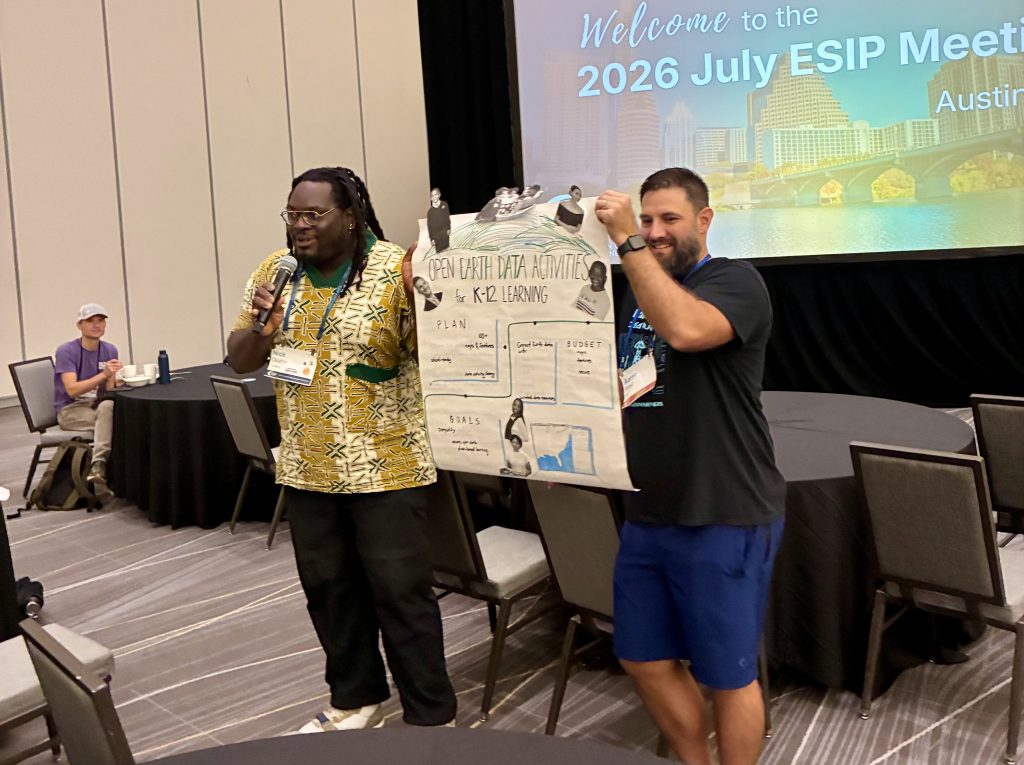
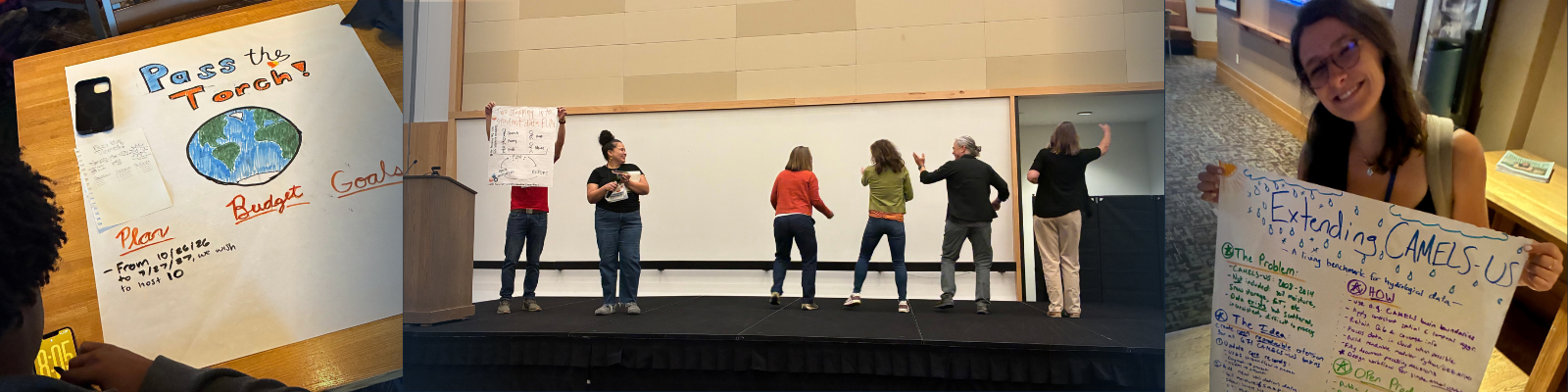
Without further ado, here are your 2026 FUNding Friday Award Winners! Each section includes the group’s poster and a short write up by the PI, crafted using the UpGoer Five text editor (that only uses the 1,000 most common English words).
- “Extending CAMELS-US” | Madeline Allen
- “Pass The Torch!” | Cordell Eddings
- “Two Stepping into Student Data Fun” | Ileana Fenwick
- “Lowering the Barrier to Earth Science Data” | Gabby Brown
- “Moth to a Flame” | Madeline Berger
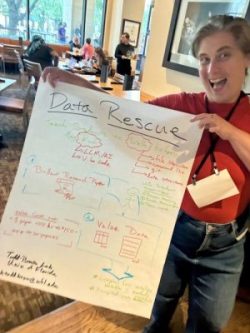
- “Data Rescue with undergraduate students” | Kathe Todd-Brown
- “Open Earth Data Activities for K-12 Learning” | Nick Okafor
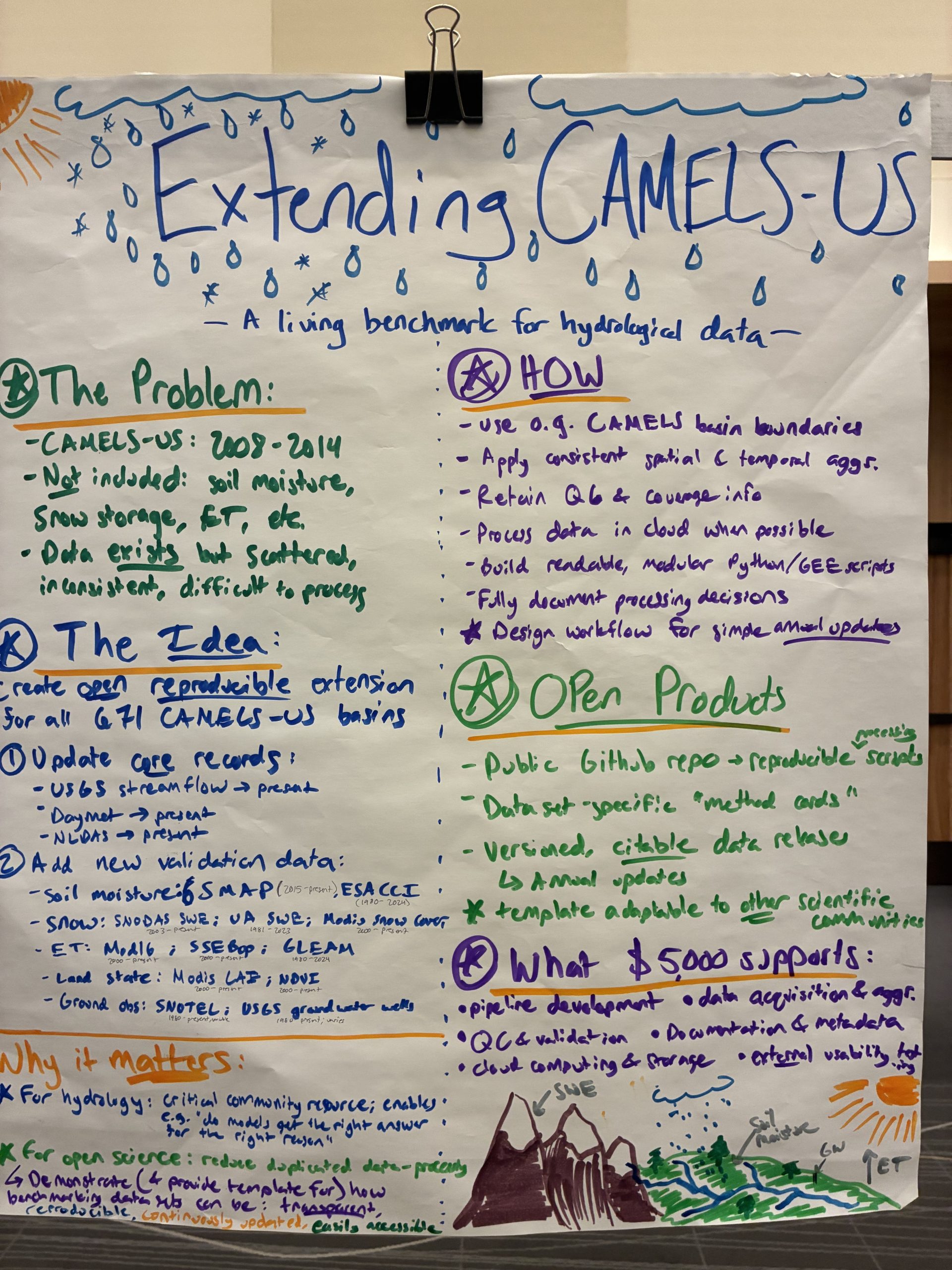
Extending CAMELS-US: “Beyond Streamflow: Expanding Hydrologic Benchmarks”
Madeline Allen (University of Cornell)
Some hydrologic benchmarking datasets don't provide broader observations of land and water needed to evaluate models.
The Plan: explore ways to bring together existing observations so they are easier to access and use for hydrologic benchmarking and model evaluation.
We have many ways to learn about where water is, where it goes, and how it changes over time. But the numbers that help us understand these things often come from many different places and can be hard to work with together.
This work will look at ways to make these numbers easier for people to find and use together. Having more ways to look at what is happening on the land can help us better understand how water moves and changes, and how well our ways of studying it are working.
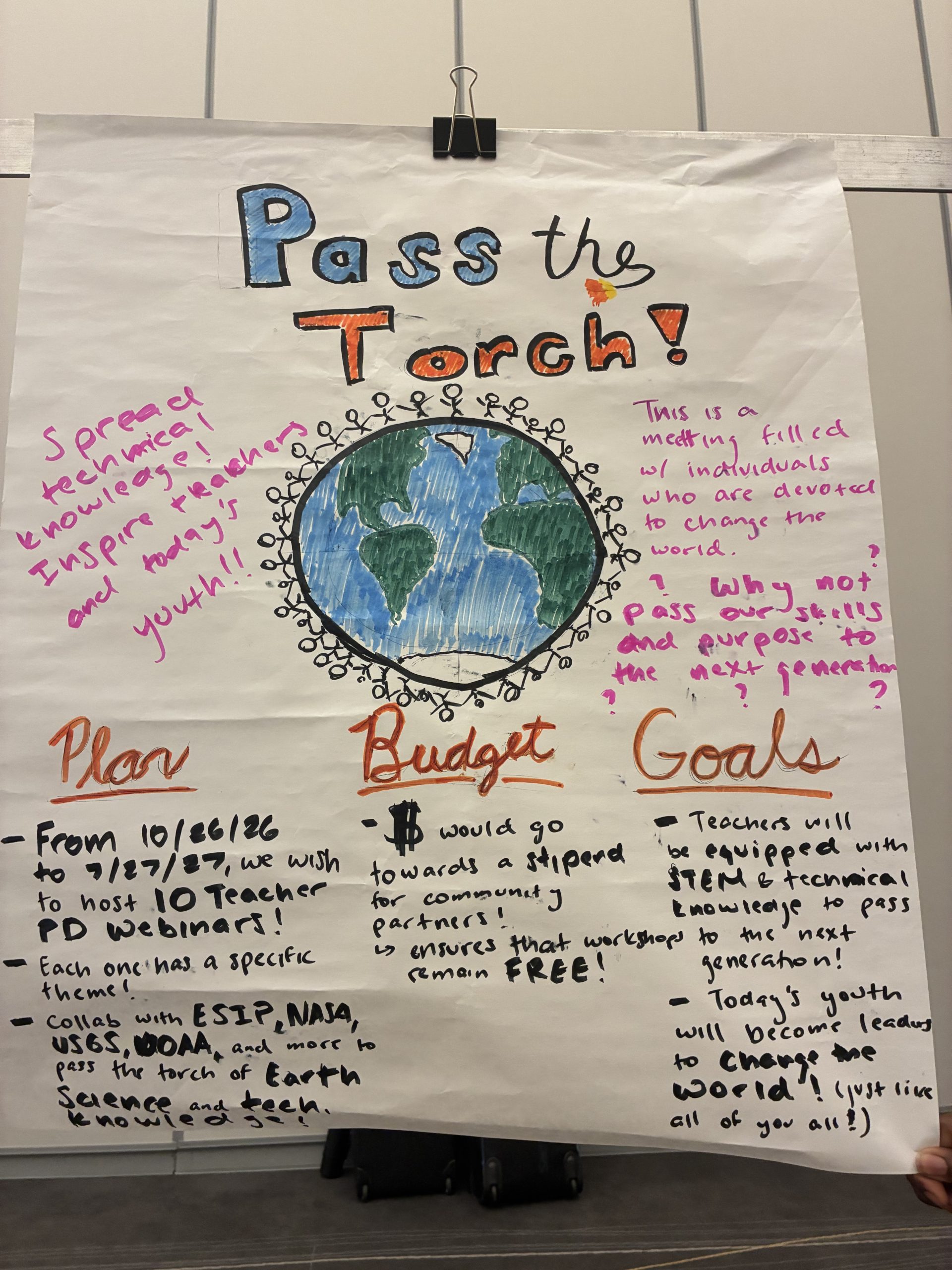
Pass The Torch!
Cordell Eddings (Trubel.co), Nick Okafor (Trubel.co), Olivia Zhang (Trubel.co)
ESIP Meetings have lots of people with lots of knowledge… how can we pass it on to teachers and youth?
The Plan: host free teacher webinars in collaboration with ESIP and federal partners.
Our plan is to work with people who study our world using pictures and numbers. Together, we will hold classes every month for teachers and other people who work in schools. This will be done to show them how to use these things with their students in their schools. These classes will not only help them do this well, but will also give them more things to read and use long after the classes are done. To pass the light of what we know down to the young people who come after us, our money will be used to pay anyone who leads these classes.
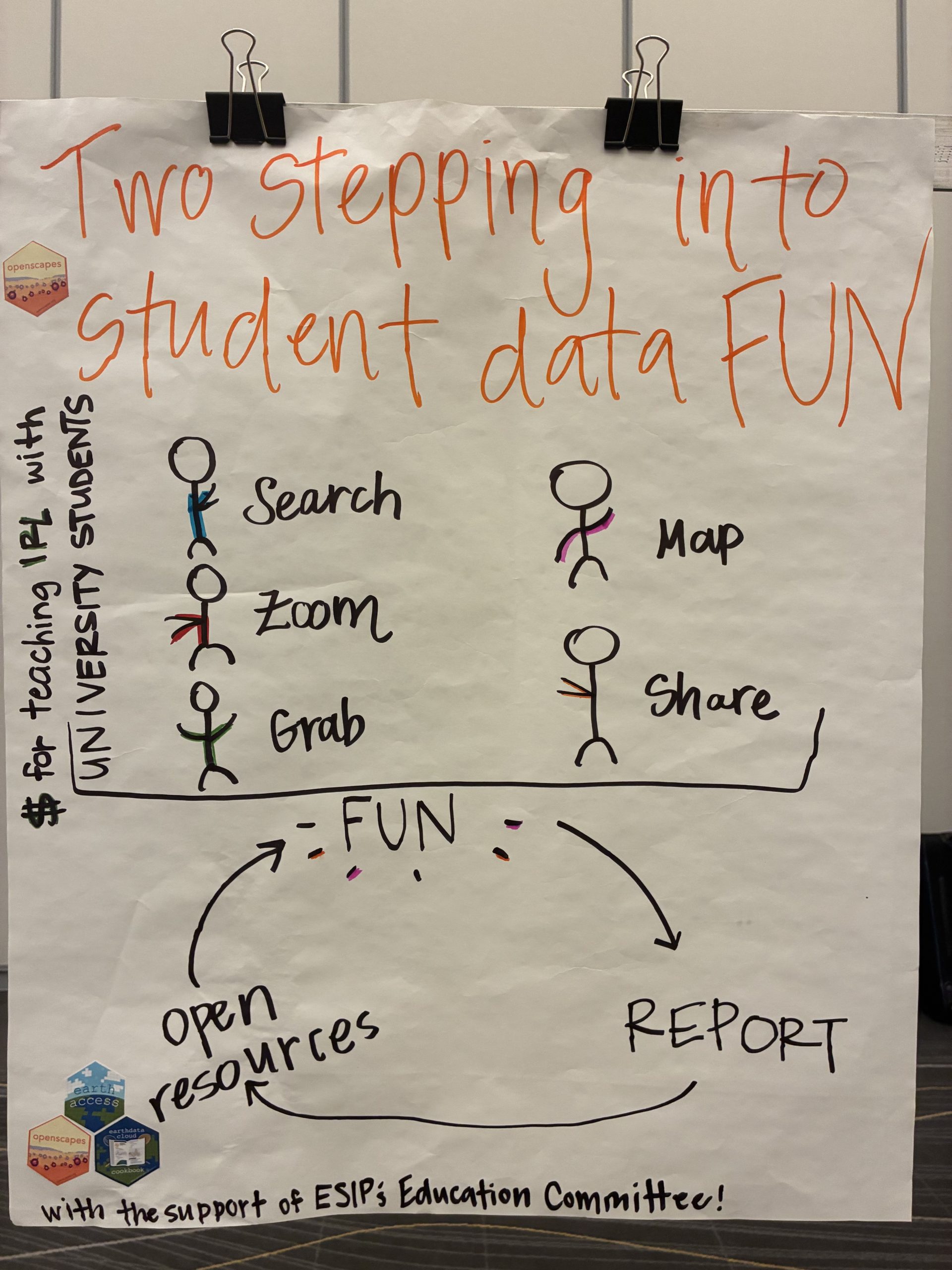
Two Stepping into Student Data Fun
Ileana Fenwick (Openscapes), Ronny Hernández Mora (Openscapes), Eli Holmes (NOAA Fisheries), Amy Steiker and Luis Lopez (NASA NSIDC), Danny Kaufman (ASDC), Michele Thorton (ORNL DAAC), Julia Lowndes (Openscapes)
We want to connect new users to open data and tools developed within the ESIP community.
The Plan: Get the earthaccess cookbook in front of university students and observe how they interact with open tools.
How do new students learn where our open work is? We want to look at how students and new people use our open work to make it easier to find! By learning from new students we will share back to the ESIP space and make our work more easy to use and find.
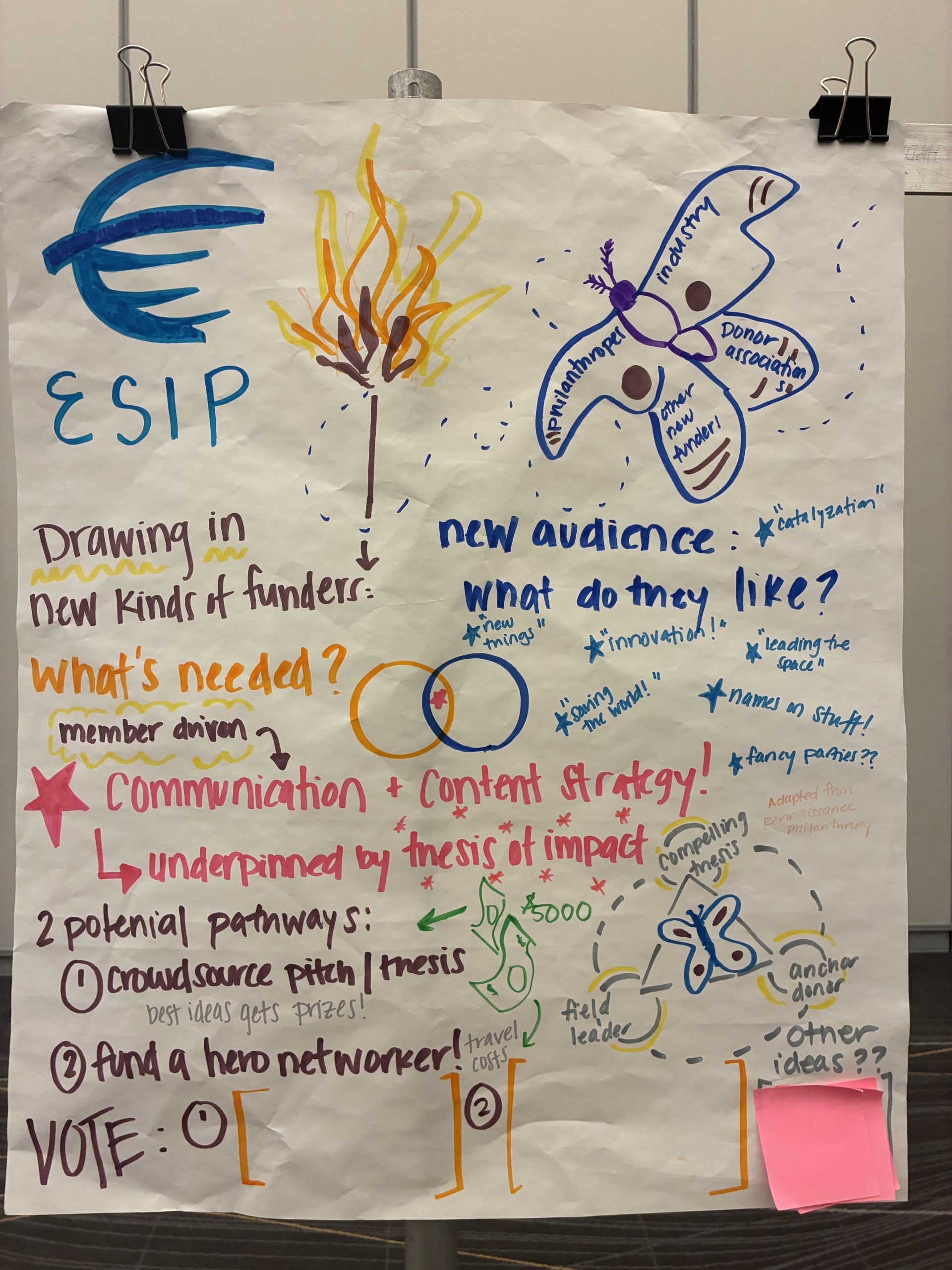
Moth to a Flame
Madeline Berger (University of Hawaii)
Earth science needs funding to keep doing amazing things and reach more groups.
The Plan: Draw more people to the purpose of ESIP, from all domains and new organizations, to diversify funding sources.
We need to find new money for our group! Changing times means new ways to keep us going. We want to bring the group together to think of ideas, meet new people and other groups and build a plan to share the amazing work we do.
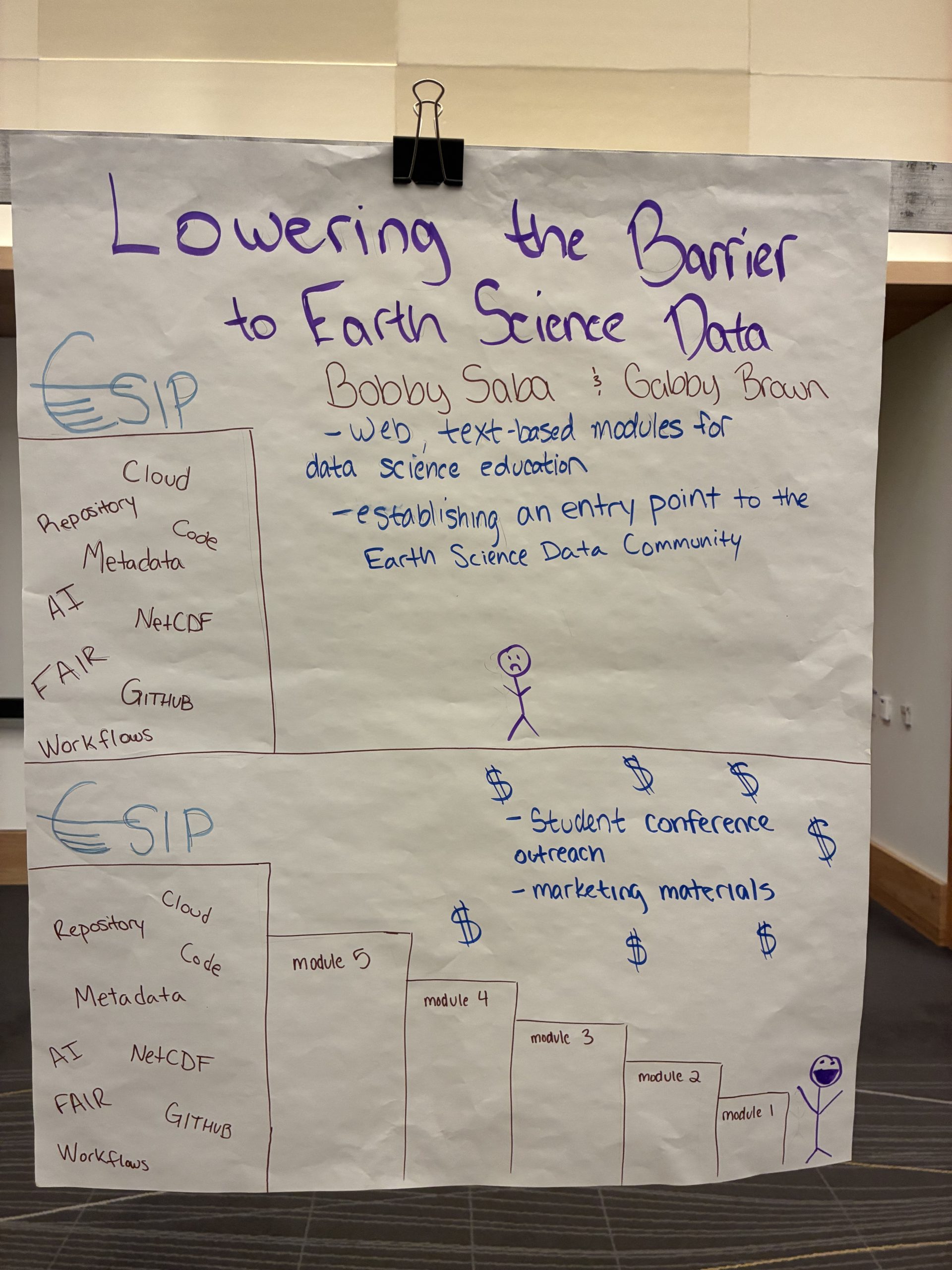
Lowering the Barrier to Earth Science Data
Gabrielle Brown (University of Oklahoma), Bobby Saba (University of Oklahoma)
Barriers to entry in the Earth science data community can be high for students.
The Plan: build web-based text modules for data science education!
Many people who study the world have to use computers to do their jobs, but they do not always learn the best ways to save, share, name, and use the things they make on their computers while they work. We will build short learning courses. Each course will focus on one thing that can help people work better with computers. This will help people who work to understand our world become better able to use computers, work with others, share their work, and use the work of other people.
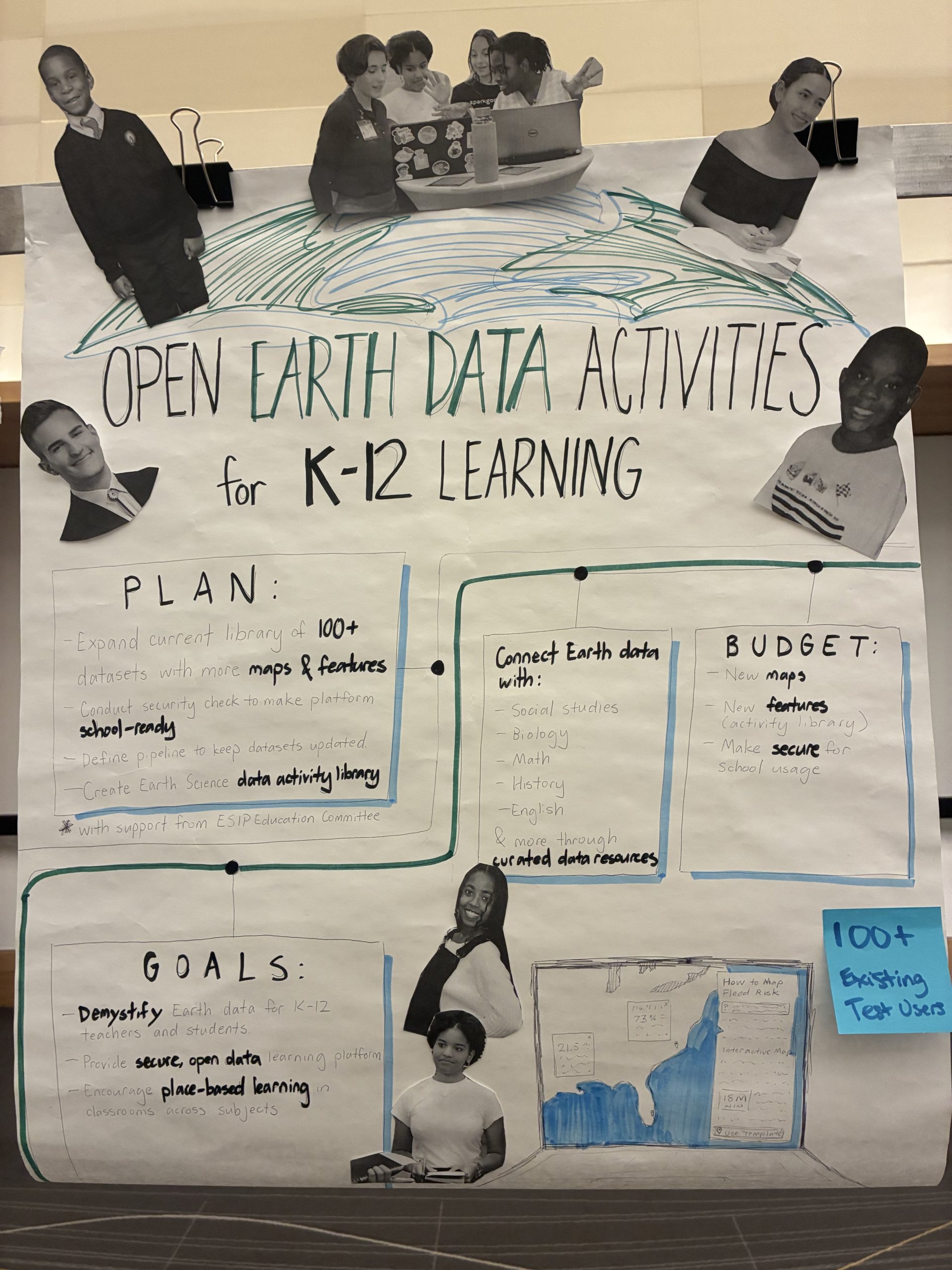
Open Earth Data Activities for K-12 Learning
Nick Okafor (trubel.co), Olivia Zhang (trubel&co)
Earth science should be demystified to encourage place-based learning in classrooms.
The Plan: Expand the library of datasets with more maps and features, that are school-ready, with activities!
Kids ask hard questions about the place they live in: why is this street so hot, why does the water come up here, who gets a park and who does not. Mr CivicScape lets a teacher turn those questions into class work. The computer helps put the day's plan together, using pictures that show what is really going on in that town. We are making Mr CivicScape safe enough to sit inside a school day: better locks and less kept about each child. We are also adding more place pictures, so a class can fix more problems in their town.
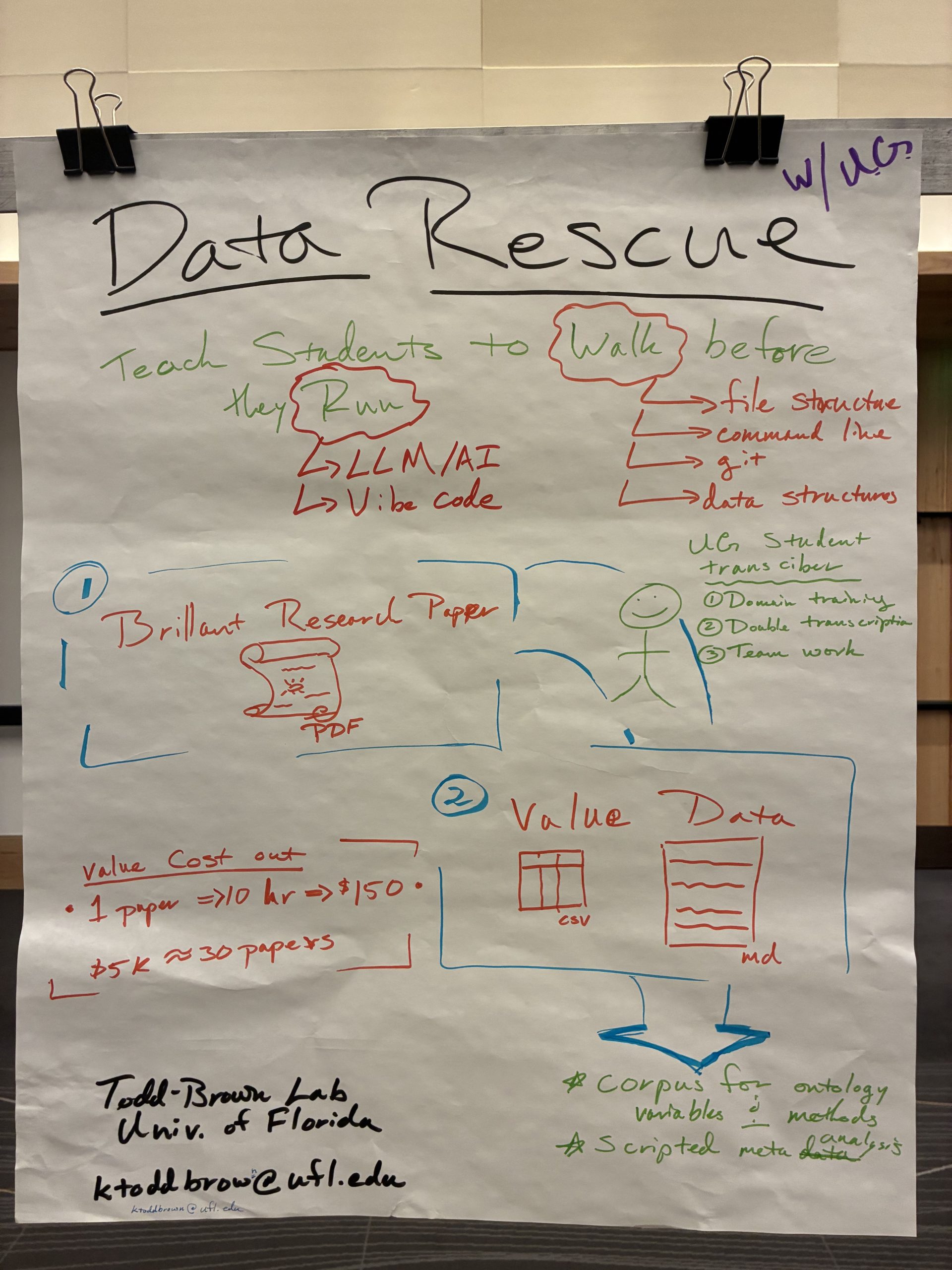
Data Rescue with Undergraduates
Kathe Todd-Brown (University of Florida)
Rescued literature data elements (e.g., tables, figures) uncovered by undergraduates from journal articles must still be harmonized and linked.
The Plan: Develop standardized vocabularies and methods-ontologies, preparing the elements for seamless integration into public resources.
Old words know things, but are hard for computers to read. We take the old words and make them clear to computers. First, we type the old words exactly. Then we help computers to clean those words. Finally, we pick what words answer: “How will air and land decide how hot it gets next?”
ESIP (Earth Science Information Partners) is a community of partner organizations and volunteers. We work together to meet environmental data challenges and find opportunities to expand, improve, and innovate across Earth science disciplines. Learn more and sign up for the weekly ESIP Update for #EarthScienceData events, funding, webinars and ESIP announcements.


