Meet the 2026 ESIP Community Fellows
ESIP Community Fellows are graduate students and postdoctoral researchers interested in bridging the gap between informatics and Earth science.
The 2026 ESIP Community Fellows will support our Collaboration Areas and Meetings in January and July, helping connect the Earth science data community. Which they do while continuing their research and growing their careers!
This year's cohort of Fellows spans many Earth science, information science, and data science fields, bringing together a strong team with interdisciplinary interests and enthusiasm.
- Bobby Saba | University of Oklahoma | COPDESS Cluster
- Chayan Roychoudhury | University of Arizona | TBD
- Gabby Brown | University of Oklahoma | Disaster Lifecycle Cluster
- Luana Antunes Alexandre | Florida International University | Envirosensing Cluster
- Maddy Allen | Cornell University | Machine Learning Cluster
- Maddie Berger | University of Hawaii, Manoa | Marine Data Cluster
- Rachel Torres | Cal Poly Humboldt | Education Committee
Interested in being an ESIP Community Fellow? Here is how to apply.
Bridging Earth science and data through collaboration
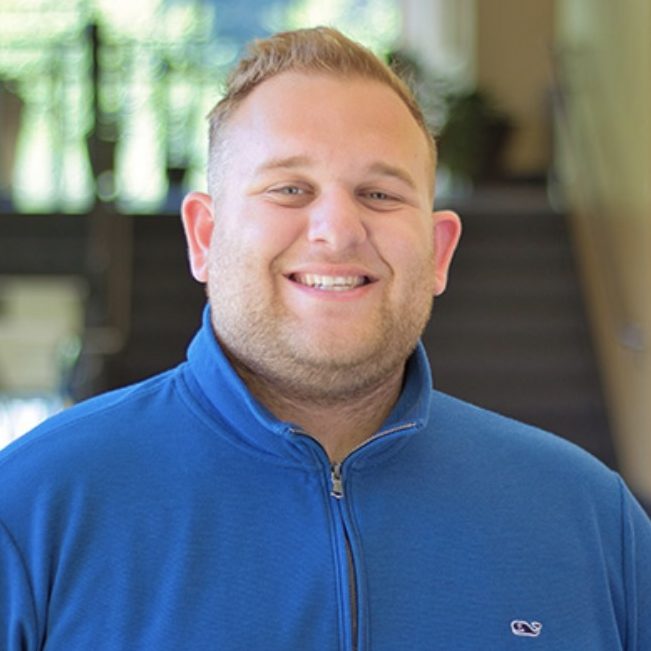
Bobby Saba
COPDESS Cluster
Bobby is a PhD student in the School of Meteorology at the University of Oklahoma focusing on severe storms research. His dissertation work includes conducting high resolution simulations to explore storm and tornado dynamics using environments from the Southeast U.S. Bobby is also heavily involved in field efforts with the National Severe Storms Laboratory where he works as a member of the Doppler wind lidar team. This work involves capturing the low-level flow fields in tornadoes as a part of the LIFT project.
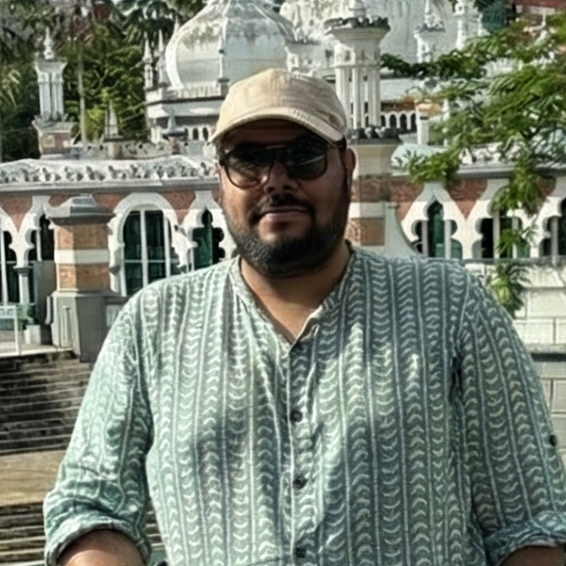
Chayan Roychoudhury
Cluster TBD
Chayan is a Postdoc in Atmospheric Sciences at the University of Arizona. His work focuses on air-quality modeling, Earth system interactions, and integrating observations with models. He has contributed to collaborative efforts related to regional reanalyses and field campaigns. He is passionate about helping researchers navigate Earth science data tools, an interest shaped by his personal experiences learning these systems as an international student. As an ESIP Community Fellow, he hopes to support researchers and students through user-friendly tutorials, resources and workflows to make diverse datasets more accessible.
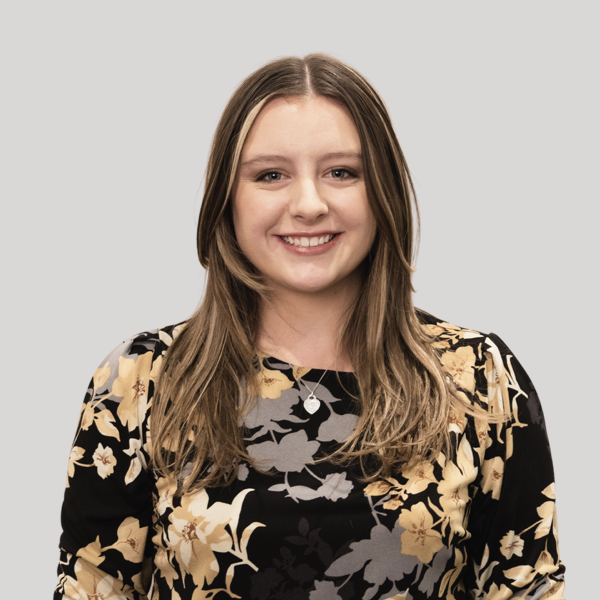
Gabby Brown
Disaster Lifecycle Cluster
Gabrielle Brown is a PhD student in the School of Meteorology at the University of Oklahoma. Her research focuses on Coastal El Niño and its influence on precipitation anomalies in Peru and Ecuador. She recently completed her master’s degree, during which she developed a framework to examine sources of predictability for extreme events on subseasonal timescales, with an emphasis on regions such as Pakistan and Peru. In alignment with her research interests, she collaborates with climate security teams to assess weather and climate challenges in vulnerable regions worldwide and to help inform climate-security decision making.
Luana Antunes Alexandre
Envirosensing Cluster
Luana is a PhD student in Earth System Science at Florida International University. She holds a bachelor’s degree in Environmental Management from the University of São Paulo (USP), Brazil. Her research focuses on air quality and remote sensing, using Pandora data supported by a NASA-funded initiative. She is a student member of the American Society for Photogrammetry and Remote Sensing (ASPRS) at FIU. Luana is also engaged in mentoring and inclusive science outreach with high schools and undergraduate mentorship.
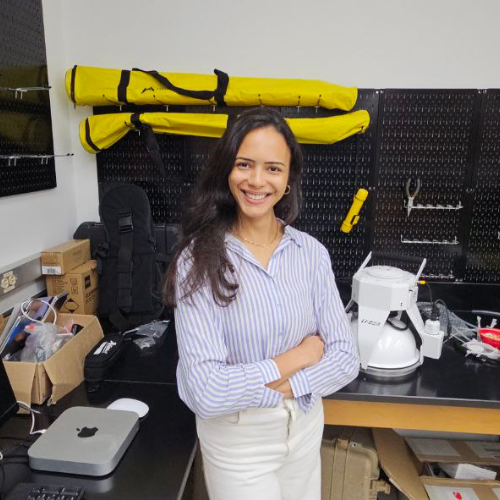
Maddy Allen
Machine Learning Cluster
Madeline is a PhD student in Civil and Environmental Engineering at Cornell University with a long-standing interest in Earth and climate systems. Her work is motivated by a desire to better understand the variability and predictability of hydrologic processes and to advance data-driven methods that support communities and water management decisions. Her research focuses on hydrologic forecasting, including characterizing hydroclimate forecast skill, evaluating the physical plausibility of deep learning model predictions under climate change, and using data augmentation to improve out-of-distribution performance.
She is passionate about open, reproducible science and is excited to be part of the ESIP community – learning from a diverse, collaborative network and contributing to conversations driven by shared curiosity and purpose.
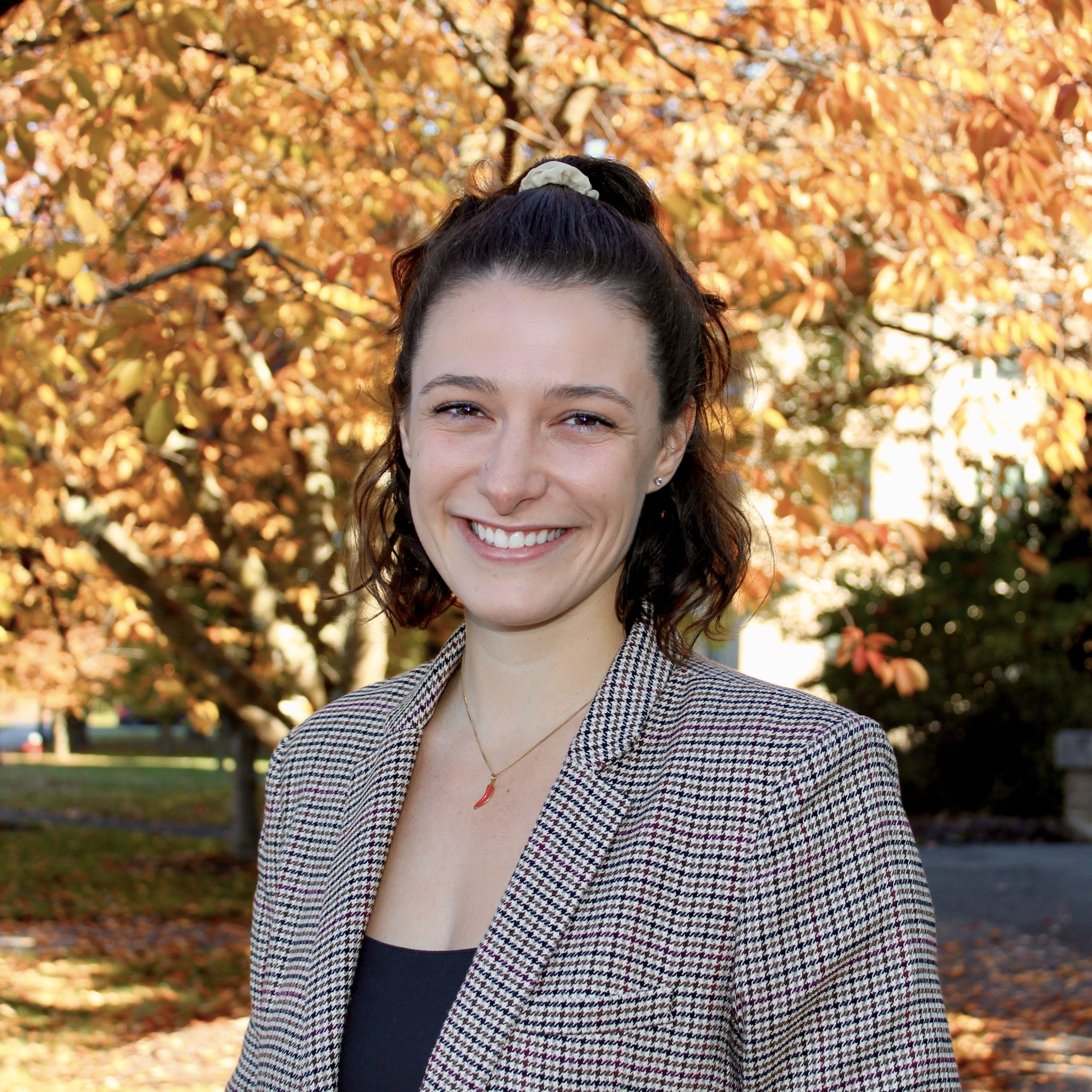
Maddie Berger
Marine Data Cluster
Madeline (Maddie) is a PhD student at the Hawaii Institute of Marine Biology at the University of Hawai‘i Mānoa. Her research focuses on quantifying the spatial and temporal patterns of land-use change at various scales in tropical coastal areas and examining how these patterns relate to marine water quality and nearshore ecological health. She applies geospatial analysis and machine-learning methods to synthesize remotely sensed satellite data, field samples, public records, and other data sources, with the aim of disentangling the drivers of localized impacts on coral reef ecosystems.
Maddie is passionate about reproducible and open science, as well as designing data products that help bridge the gap between research and resource management. Maddie brings an interdisciplinary background to her work, with an M.S. in conservation planning and data science from the Bren School of Environmental Science & Management and a B.A. in economics from the University of California, Los Angeles.
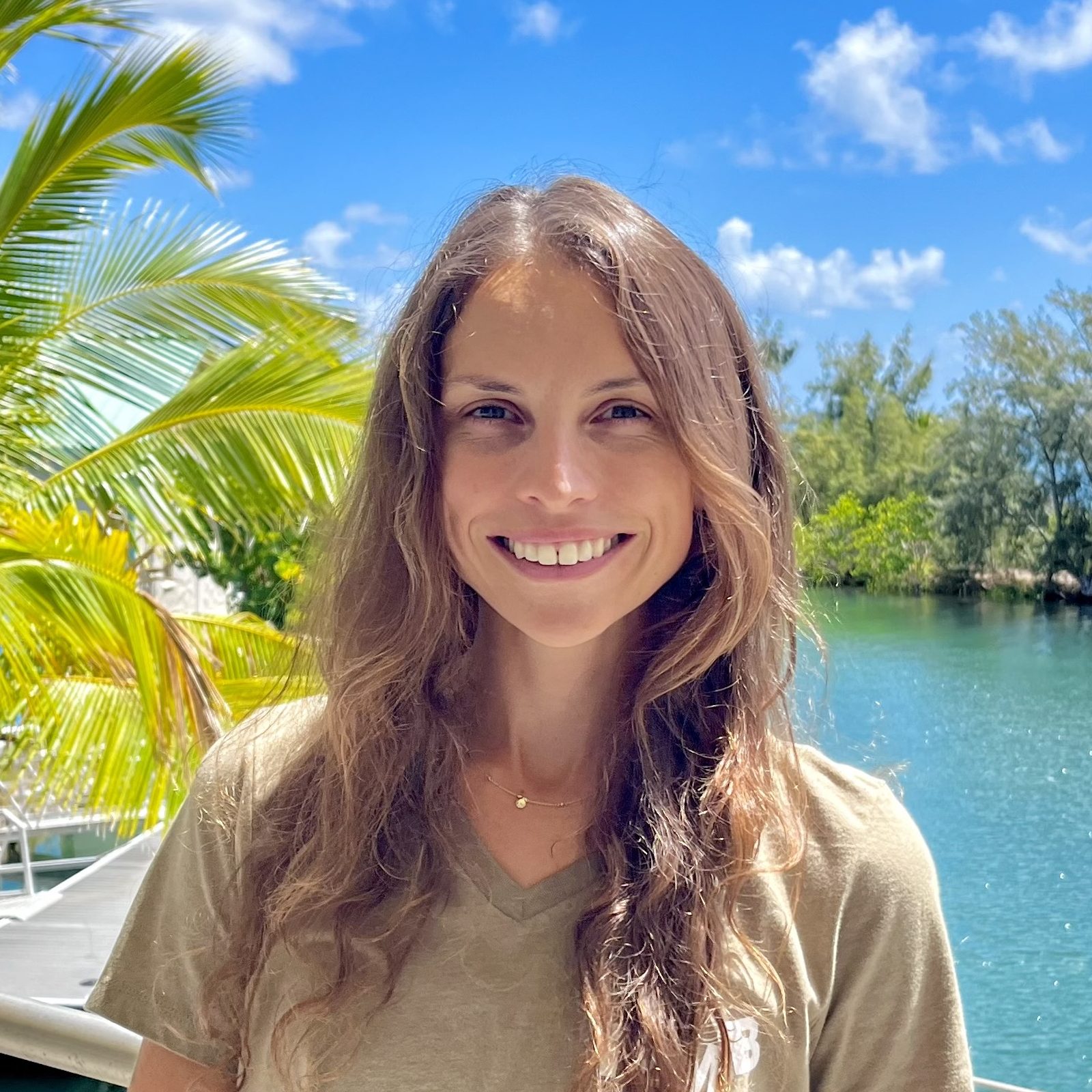
Rachel Torres
Education Committee
Rachel is passionate about making environmental data science education more inclusive and accessible. She is a postdoctoral scholar with a multi-institutional network developing earth and environmental data science curriculum, collaborating with instructors at Tribal and Community Colleges, and mentoring undergraduate research projects in ecological forecasting. She became interested in teaching and mentorship while working as a teaching assistant for Earth Systems Science during her PhD at UC Santa Barbara.