Be a speaker at this December’s Spark@AGU! Learn more and submit a talk idea by October 19.

Join us for the next ESIP Meeting!
ESIP is a home for Earth science data and computing professionals. Our sessions bring together the community for hands-on, interdisciplinary deep dives.



Bridging Divides: Data, Technology, Community
ESIP Meetings cover current trends, problems, and emerging issues in Earth science data and information. Over the four days, ESIP brings together stakeholders from government agencies, industry and academic research institutions for a mix of plenary talks, breakout sessions, poster presentations, technical workshops, networking, and special events. Our breakout sessions are led by community participants and feature a broad range of Earth science data management topics related to the annual theme.
Our theme for 2027, “Trusted Science: Integrity Across Data Landscapes,” addresses a defining challenge for the Earth science data community. In an era when artificial intelligence and machine learning are rapidly transforming how we collect, process, interpret, and communicate information, the foundations of our work (our data, systems, practices, and relationships) must remain trustworthy.
This year’s theme explores “integrity” through three interconnected lenses:
- Systemic Integrity: As data ecosystems grow in scale and complexity, we must strengthen the integrity of the systems that support them. This includes stewarding metadata standards, building resilient infrastructure, and designing interoperable processes that connect diverse data landscapes across domains, institutions, and communities.
- Scientific Integrity: The accelerating use of AI and other emerging technologies raises new questions about transparency, reproducibility, authenticity, and accountability. How do we keep data open and FAIR while ensuring that scientific evidence remains credible, traceable, and understandable?
- Ethical and Community Integrity: Trustworthy science must consider the people and communities represented in and affected by data. The CARE Principles complement FAIR by asking how data should be governed, whose interests it serves, and who has a voice in its use, advancing practices that are both technically sound and socially responsible.
Science cannot be trusted if its data, methods, and relationships are not credible. This theme is a call to strengthen integrity across the full Earth science data lifecycle: from infrastructure and analysis to authoritative governance and application. By building systems that are resilient, science that is transparent, and practices that are responsible to communities, we can deliver the critical and actionable knowledge our changing planet needs.
Join the discussions, demonstrations, and hands-on tool explorations at the next ESIP Meeting.
July 2026 Meeting
When and Where
July 28-31, 2026
Austin, TX and online
AT&T Executive Education & Conference Center
The call for Session Proposals is now closed.
Sign up for the ESIP Update to stay up to speed on information regarding ESIP Meetings.
Registration Rates for JUL26
Registration has ended.
Your in-person registration fee includes: Breakfast, Lunch, and breaks
Rates (Early registration has ended)
In-Person Rates:
Partner Rate / Emeritus Rate – $800
Non-Partner Rate – $900
Student Registration – $250
1-day Rate (In-Person ONLY) – $450
Teacher (K-12) workshop only – $20.00
Virtual Rates:
Partner Rate / Emeritus Rate – $400
Non-Partner Rate – $500
Student Registration – $250
Teacher (K-12) workshop only – $20.00





Where is the next ESIP Meeting?
2027 January – Virtual – Jan 26-29, 2027
2027 July – Buffalo, NY + Online – Jul 20-23, 2027
ESIP Meetings move from location to location in the United States, but we offer virtual connection all year. Our meetings have been everywhere from Asheville, NC to Tacoma, WA, from Scottsdale, AZ, to Pittsburgh, PA.
Have a suggestion or request? Send us an email at [email protected] and let us know.
What are ESIP Meetings like?
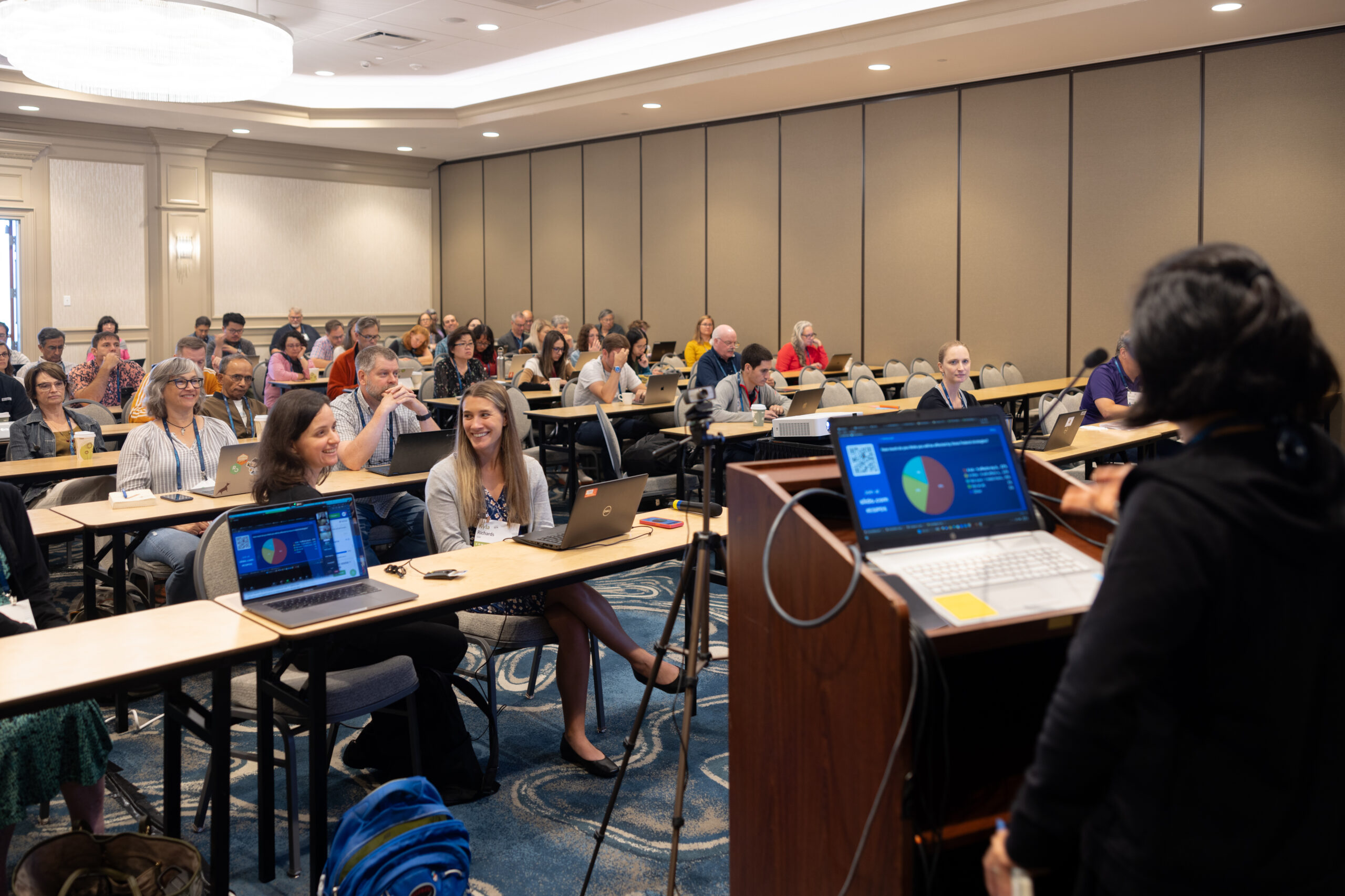
The ESIP community gathers twice each year: In January for a virtual meeting and in July for a hybrid, in-person meeting. We focus on Earth science and its technical challenges.

Find your people
ESIP Meetings are open to anyone interested in Earth science data, computing, and technology.
There are about 300 attendees from the Earth, space, and environmental sciences.

Dive into #EarthScienceData
Each meeting has a theme, ranging from the big-picture impacts of data to the nitty-gritty of new tools and information quality.
Many sessions are interdisciplinary and may cover specific tools or broad concepts.

Interactive session formats
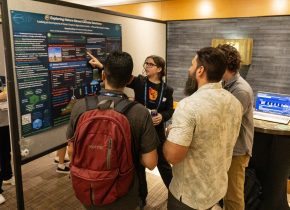
Our meetings cover current trends, problems, and emerging issues in Earth science data and information. There is a mix of plenary talks, breakout sessions, poster presentations, technical workshops, networking, and special events.
ESIP meetings are open to anyone interested in Earth science data.
Many attendees are information technology professionals, teachers, and researchers. Their scientific fields include atmosphere, ocean, solid earth, ecology, data science, and social sciences.
Some attendees join monthly calls in ESIP’s Collaboration Areas.
ESIP Meeting Sponsors
Here are companies who have sponsored ESIP Meetings in the past. Help us innovate and improve our collaboration model!